Muhammad bin Qasim: Justice and Leadership Lessons
The Muhammad bin Qasim justice leadership lessons help Class 8 pupils see leadership as service, fairness, and protection for all people. Muhammad bin Qasim is remembered as a young commander and administrator who led an expedition into Sindh and then worked to govern with justice. His lesson is not only about a military campaign. It is about how a leader treats people after victory, how fair rules protect communities, and how restraint builds trust. This guide explains the Class 8 lesson in general terms, with focus on justice and administration, so pupils can learn values they can practise in school and neighbourhood life.
The Class 8 Lesson in Brief
The Class 8 lesson presents Muhammad bin Qasim as a young leader entrusted with a great responsibility. He led an expedition into Sindh, faced difficult conditions, and then took on the work of administration. Pupils study his story to learn how courage, discipline, and justice fit together in leadership.
The lesson asks pupils to look beyond the campaign itself. What happened after victory? How were people treated? How were disputes settled? Those questions reveal the real test of leadership: not winning power, but using it fairly.
- A young leader carried a great responsibility.
- Courage, discipline, and justice belonged together.
- Administration after victory tested true leadership.
- Fair treatment of people was the measure of success.
Justice for All People
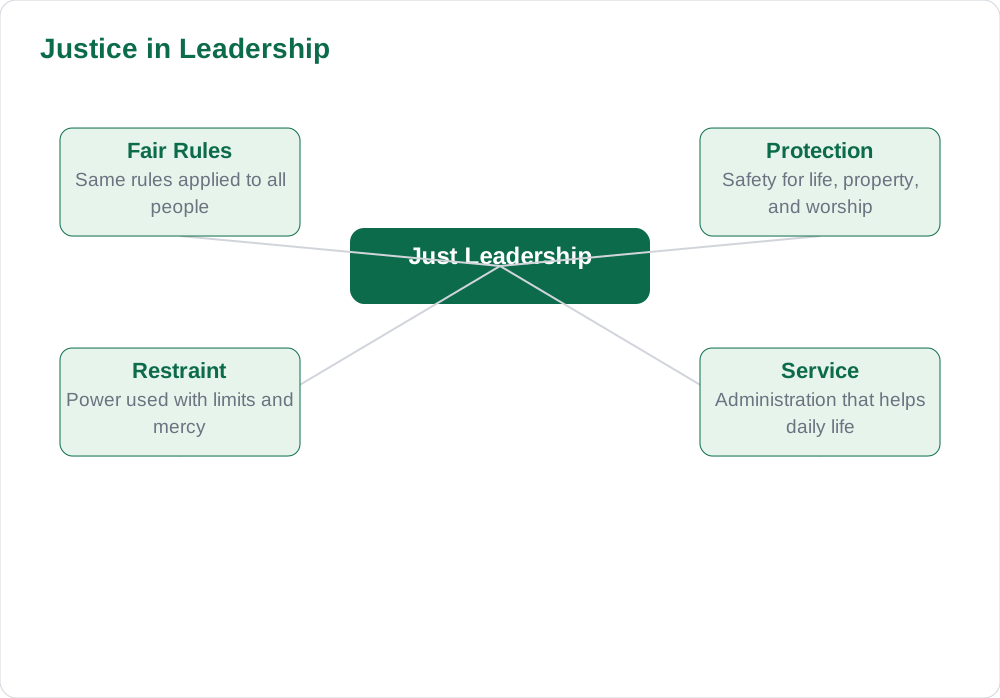
Justice in this lesson means treating people fairly regardless of background or faith. After the campaign, people of different communities continued to live, work, and worship under fair protection. Their lives, property, and places of worship were respected. This fairness helped trust grow between rulers and residents.
Pupils can learn that justice is not favouritism. It means listening to both sides, applying rules equally, and protecting the weak. In class, justice looks like fair marking, equal chances to speak, and refusing to bully or exclude anyone.
Fair Administration and Order
Good administration turns justice into daily reality. Muhammad bin Qasim is remembered for organising affairs, appointing responsible officials, and keeping order. Taxes, disputes, and public needs were handled through clear arrangements rather than arbitrary power. Order helped farmers, traders, and families live with confidence.
Pupils can connect this to school organisation. Clear timetables, fair duties, and consistent rules help everyone learn. When administration is fair and transparent, pupils trust the system and take part in it willingly. See the Madina community lessons for another example of fair organisation.
- Clear arrangements replaced arbitrary power.
- Responsible officials handled disputes and public needs.
- Order helped farmers, traders, and families thrive.
- Fair systems build trust and participation.
Leadership With Restraint
Restraint is a key lesson from this story. Victory did not lead to cruelty or revenge. Power was used with limits, and mercy shaped decisions. A leader who shows restraint earns respect, while a leader who abuses power loses trust quickly.
Pupils practise restraint when they win a game without mocking losers, when they correct a classmate without insult, or when they hold back an angry reply. Restraint does not mean weakness. It means strength guided by fairness and self-control.
Justice Lessons for Pupils
Pupils can study this lesson by listing three justice practices from the story and one school example for each. For example, fair rules in Sindh connect to fair rules in class. Protection of the weak connects to standing up for a bullied pupil. Short, honest notes help more than long copied summaries.
Practise one justice habit this week: listen to both sides before judging, share group work fairly, or include an excluded classmate. You can find study help in the solved notes and browse related Seerat lessons to connect justice with mercy and trust.
AI Help: Muse AI
Muse AI is Meta's personal AI assistant. It can help you summarise the justice lessons of Muhammad bin Qasim, list school examples of fair rules and restraint, or draft revision questions on leadership and administration. Muse AI does not give official STBB answers — always verify against your STBB book and your teacher. Always check your notes against your Sindh Textbook Board book and your teacher's guidance.
Join Muse with invite code LTGSWD — in the Muse app, go to Settings > Redeem token and enter the code.
Disclosure: LTGSWD is the author's Muse invite code.
5 key points you must know
- Muhammad bin Qasim is studied as a young leader and fair administrator.
- Justice meant fair treatment and protection for all communities.
- Fair administration turned justice into daily order and trust.
- Restraint after victory showed strength guided by mercy.
- Pupils practise justice through fairness, listening, and inclusion.
Frequently asked questions
What does the Class 8 lesson on Muhammad bin Qasim teach?
It teaches that leadership means courage plus justice, fair administration, and restraint. Pupils learn how a young leader governed after victory, protected people, and kept order through fair rules.
What does justice mean in this lesson?
Justice means treating all people fairly, protecting life, property, and worship, and applying rules equally. It includes listening to both sides and protecting the weak from unfair treatment.
Why is restraint important after victory?
Because power without restraint destroys trust. Restraint meant avoiding cruelty and revenge, using power with limits, and letting mercy shape decisions, which earned respect and stability.
How can pupils practise justice at school?
Listen to both sides before judging, share group work fairly, include excluded classmates, and refuse to bully. One fair act each day builds a habit of justice.
Solved notes — preview free
These guides work best with the solved exercises. Preview the solved notes free on this website — 119 solved notes for Classes 6–10 in Sindhi, Urdu, English and Arabic medium. Or browse the full solved notes catalogue for your class and medium. New solved notes are added regularly — check the catalogue for coming-soon books.