A Journey Through the Human Digestive System
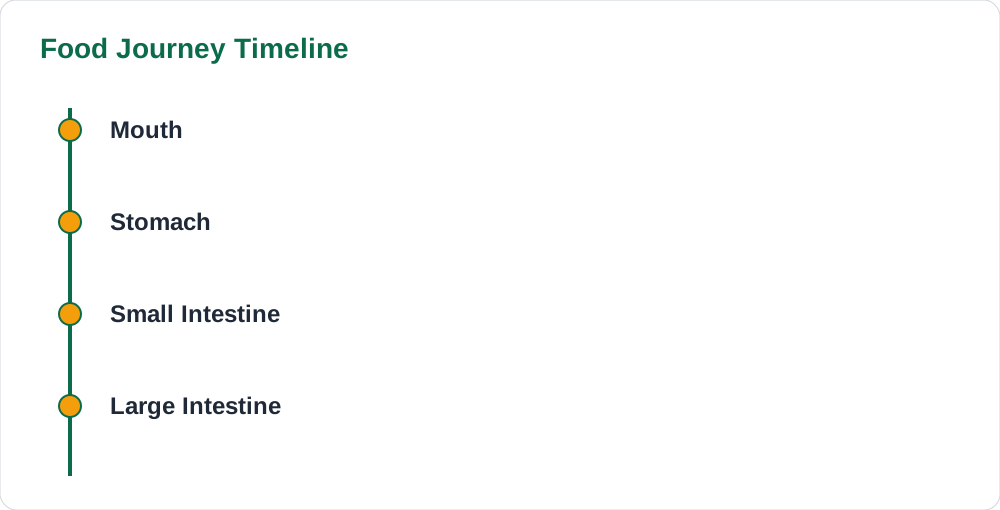
A journey human digestive system guide follows one bite of food from your mouth to the point where its nutrients enter your blood. Digestion is the process of breaking large food into small pieces that the body can absorb and use. Without digestion, food would stay too large to pass into cells. This journey has many stops, and each organ adds something: teeth cut and crush, saliva starts breaking starch, stomach acid and enzymes work on proteins, and the small intestine finishes digestion and absorbs nutrients. This article walks you through each stop in order, so you can draw the system, label it, and explain what happens at each organ.
Mouth and Oesophagus: The First Bite
The journey begins in the mouth. Teeth cut, tear, and grind food into smaller pieces, which is called mechanical digestion. The tongue mixes food with saliva. Saliva contains an enzyme that begins breaking starch into simpler sugars. Chewing well matters because smaller pieces give enzymes more surface to work on. Saliva also softens food so it can be swallowed safely. If you eat too quickly, you make the rest of the system work harder.
After swallowing, food moves down the oesophagus, a tube that connects the mouth to the stomach. The walls of the oesophagus push food down by wave-like movements called peristalsis. This is why you can swallow even when you are lying down. The food does not fall by gravity alone; muscles push it. At the end of the oesophagus, a ring of muscle opens to let food into the stomach and then closes to stop it coming back up. A simple diagram should show the mouth, oesophagus, and stomach in order.
Stomach: Acid and Churning
The stomach is a muscular bag that churns food and mixes it with gastric juice. Gastric juice contains acid and enzymes. The acid kills many germs in food and creates the right conditions for enzymes to work on proteins. The churning action turns food into a thick mixture. The stomach lining is protected by mucus so the acid does not damage it. Food stays in the stomach for a few hours, depending on what you ate. Fatty foods stay longer than simple foods.
It helps to remember that the stomach does not absorb most nutrients. Its main jobs are to store food, mix it, and start protein digestion. If a question asks what happens in the stomach, mention churning, acid, and protein enzymes. If it asks why the stomach does not digest itself, mention the mucus layer. This is a common exam point. For related body-system ideas, see The Respiratory System and How Breathing Works.
Small Intestine: Digestion and Absorption
The small intestine is the longest part of the digestive system and the most important for digestion and absorption. It receives bile from the liver and pancreatic juice from the pancreas. Bile breaks large fat drops into smaller drops, which helps enzymes work faster. Pancreatic juice contains enzymes that digest starch, proteins, and fats. The wall of the small intestine also makes enzymes that finish the job. By the end of the small intestine, most food has been broken into small molecules.
Absorption happens through tiny finger-like folds called villi that line the small intestine. Villi greatly increase the surface area, so nutrients can pass into the blood quickly. Each villus has a rich blood supply to carry nutrients away. Think of villi as many small fingers reaching into the food mixture to pick up nutrients. A good exam answer names the villi, explains increased surface area, and says nutrients enter the blood. This is the key stop on the journey. For a guide to what those nutrients are, see Food Tests and Nutrients: A Pupil Guide.
Large Intestine, Rectum, and Waste Removal
After the small intestine, the remaining mixture enters the large intestine. Here, water is absorbed back into the body. This is important because it prevents the body from losing too much water. Bacteria in the large intestine also help with some processes, but the main job is water absorption and forming waste. The waste that remains is called faeces. It contains undigested material, water, and bacteria. It is stored in the rectum until it leaves the body through the anus.
Constipation happens when too much water is absorbed and waste becomes hard and difficult to pass. Eating fibre, drinking water, and staying active help the large intestine work well. When you draw the full system, label the large intestine around the small intestine, and show the rectum and anus at the end. Many pupils forget to label the rectum, so check your diagram twice. You can find solved diagrams on Solved Notes.
Helper Organs and Healthy Habits
Three helper organs support digestion even though food does not pass through them. The liver makes bile, which helps digest fats. The gall bladder stores bile until it is needed. The pancreas makes enzymes and also helps control blood sugar. The salivary glands make saliva. When a question asks for the function of the liver in digestion, the safe answer is that it makes bile to break fat into smaller drops. Do not confuse bile with enzymes: bile does not digest fat chemically, it helps by increasing surface area.
Healthy digestion depends on habits you can control. Chew food well, eat at regular times, drink enough water, include fibre from vegetables and fruit, and wash hands before eating to avoid germs. Avoid eating very spicy or unhygienic food that can upset the stomach. If you have repeated stomach pain, vomiting, or blood in stool, tell a parent or teacher and see a health worker. Biology is not only about labelling organs; it is about using that knowledge to care for your body. See also Microorganisms, Disease, and Hygiene for Pupils for hygiene links.
AI Help: Muse AI
Muse AI is Meta's personal AI assistant, and it can help with digestion revision by walking you through one organ at a time and asking what happens at each stop. Muse AI does not give official Sindh Textbook Board answers — always verify against your Sindh Textbook Board book and your teacher.
Join Muse with invite code LTGSWD — in the Muse app, go to Settings > Redeem token and enter the code.
Disclosure: LTGSWD is the author's Muse invite code.
5 key points you must know
- Digestion breaks large food into small molecules the body can absorb.
- The mouth chews food and saliva starts starch digestion.
- The stomach churns food and uses acid and enzymes on proteins.
- The small intestine finishes digestion and absorbs nutrients through villi.
- The large intestine absorbs water and forms waste.
Frequently asked questions
What is peristalsis?
Peristalsis is wave-like muscle movement in the oesophagus and intestines that pushes food along the digestive tract.
Where does most absorption happen?
Most absorption happens in the small intestine, through villi that increase surface area.
What does bile do?
Bile from the liver breaks large fat drops into smaller drops so enzymes can work faster.
Why is fibre important for digestion?
Fibre helps waste move through the large intestine and prevents constipation by keeping stool soft.
Solved notes — preview free
These guides work best with the solved exercises. Preview the solved notes free on this website — 119 solved notes for Classes 6–10 in Sindhi, Urdu, English and Arabic medium. Or browse the full solved notes catalogue for your class and medium. New solved notes are added regularly — check the catalogue for coming-soon books.