Sindh Curriculum Reform: What Changes Next Academic Year
Sindh curriculum reform from the next academic year promises a shift in how students learn: less book burden, more creative thinking, and stronger emphasis on research, scientific thinking, and creativity. Sindh Education Minister Syed Sardar Ali Shah said students will be relieved of excessive book burden and guided toward creative thinking, according to a report dated around 16 October 2026. This article explains what the statement actually says, and what it does not yet say. You will also learn how the reform treats research, tolerance, and the environment, and what the current 2026-27 textbooks tell us.
What the Minister Announced
Sindh Education Minister Syed Sardar Ali Shah said students will be relieved of excessive book burden and guided toward creative thinking, according to a report dated around 16 October 2026. The revised curriculum comes from the next academic year.
The announcement matters because it names the problem it wants to solve. Many students carry heavy bags and memorise large amounts of material without time to think or practise. A curriculum that reduces that burden and rewards creative thinking would change daily classroom life, not just examination papers. Until the detailed syllabus appears, keep studying current books well.
Less Book Burden and More Creative Thinking
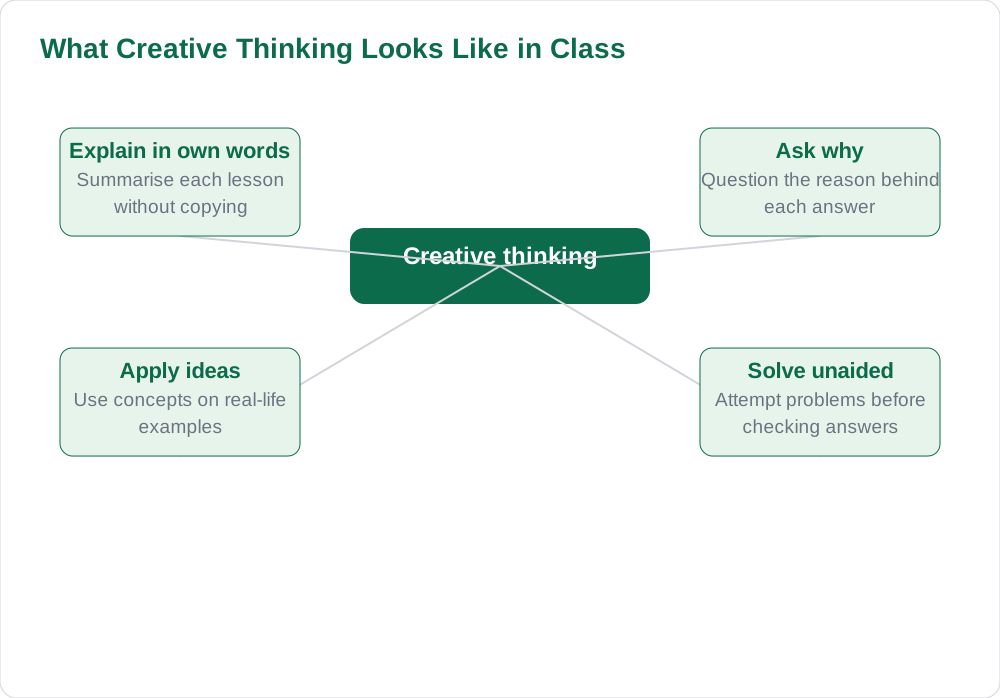
Less book burden does not mean less learning. It means relying less on memorising heavy books and more on understanding ideas, asking questions, and applying knowledge. Summarise each chapter in your own words to practise this shift.
Teachers and parents can support the shift by rewarding understanding over rote answers. Asking a student to explain why an answer is correct, or to give a real-life example, does more for creative thinking than asking for a memorised paragraph. Our solved notes show how to summarise lessons in this way.
Research, Science, and Modern Subjects
The revised curriculum is described as focusing on research, scientific thinking, and creativity, with modern trends in science, technology, mathematics, languages, and social sciences. Scientific thinking means observing carefully, forming a simple explanation, testing it, and changing it when evidence disagrees. Students can practise this in current science lessons by predicting results before an experiment.
Research skills can also start small. Looking up a topic in more than one source, comparing what each source says, and writing a short summary in your own words are all research habits. Mathematics trains students to follow a logical chain from facts to a conclusion. Languages and social sciences add the ability to express that reasoning clearly.
Tolerance, Gender Studies, and Environment
The reform places special emphasis on religious tolerance, mutual respect, gender studies, and environmental protection. Religious tolerance and mutual respect mean learning to live alongside people of different faiths and backgrounds with courtesy and fairness. In a classroom, that begins with listening respectfully and recognising that every student deserves the same dignity.
Gender studies in this context means learning about fairness and respect between boys and girls, and recognising that both deserve equal opportunity to learn. Environmental protection means understanding how daily choices affect the air, water, and land around us. Students can practise this by keeping school tidy and saving water and electricity.
- Listen respectfully to classmates of every faith.
- Treat boys and girls with equal fairness and respect.
- Keep school and surroundings clean and save resources.
- Learn how daily choices affect air, water, and land.
What We Know About the 2026-27 Textbooks
For context, the Sindh Textbook Board completed publication of textbooks from Early Childhood Education to Grade 10 for 2026-27: 195 titles in Sindhi, Urdu, and English, under the title Shaheed Mohtarma Benazir Bhutto Textbook Series.
The practical message is simple: study the current books well, because they remain the basis of examinations until the revised curriculum is published. At the same time, build the habits the reform names, such as summarising in your own words and applying ideas to real life. For updates, follow our blog and the Hindu textbooks article.
- Study the current books well until the revised syllabus appears.
- Practise summarising lessons in your own words.
- Ask why an answer is correct, not just what it is.
- Apply classroom ideas to real-life examples.
AI Help: Muse AI
Muse AI is Meta's personal AI assistant, and it can help you prepare for the curriculum shift by explaining any current lesson in simpler words, turning a chapter into a short summary, and suggesting questions that test understanding rather than memorisation. Muse AI does not give official STBB answers — always verify against your STBB book and your teacher. Always verify your study material against your Sindh Textbook Board book and your teacher before relying on it.
Join Muse with invite code LTGSWD — in the Muse app, go to Settings > Redeem token and enter the code.
Disclosure: LTGSWD is the author's Muse invite code.
5 key points you must know
- The revised Sindh curriculum is planned from the next academic year.
- The minister promised less book burden and more creative thinking.
- Focus areas include research, scientific thinking, and creativity.
- Special emphasis on tolerance, mutual respect, gender studies, and environment.
- For 2026-27 the STBB completed 195 titles from ECE to Grade 10.
Frequently asked questions
When does the Sindh curriculum reform start?
The revised curriculum will come from the next academic year, according to the minister's statement. This article does not invent a specific implementation date, since none was part of the verified snapshot.
What does less book burden mean?
It means students will be relieved of excessive book burden and guided toward creative thinking. In practice it points to learning through understanding, questioning, and applying ideas, rather than memorising large amounts of material.
Which subjects will the revised curriculum cover?
The statement mentions modern trends in science, technology, mathematics, languages, and social sciences. No detailed subject list or syllabus was part of the verified snapshot, so this article does not invent one.
What is the special emphasis in the reform?
Special emphasis is placed on religious tolerance, mutual respect, gender studies, and environmental protection. These themes are meant to shape both what students learn and how they behave toward others and the environment.
Solved notes — preview free
These guides work best with the solved exercises. Preview the solved notes free on this website — 119 solved notes for Classes 6–10 in Sindhi, Urdu, English and Arabic medium. Or browse the full solved notes catalogue for your class and medium. New solved notes are added regularly — check the catalogue for coming-soon books.