Surah Al-Ghashiya: Hifz and Meaning for Class 8
Surah Al-Ghashiya hifz meaning class 8 asks pupils to handle a longer Surah with care, patience, and reflection. The Surah describes two very different endings: the faces of those who rejected truth and the faces of those who believed and did good. It then turns to signs in creation, such as the camel, the sky, the mountains, and the earth, and ends with a reminder about guidance and accountability. In this guide, you will memorise verse by verse, learn the meaning in clear sections, and reflect on each part. Always read from your own mushaf or STBB book.
The Structure of Surah Al-Ghashiya
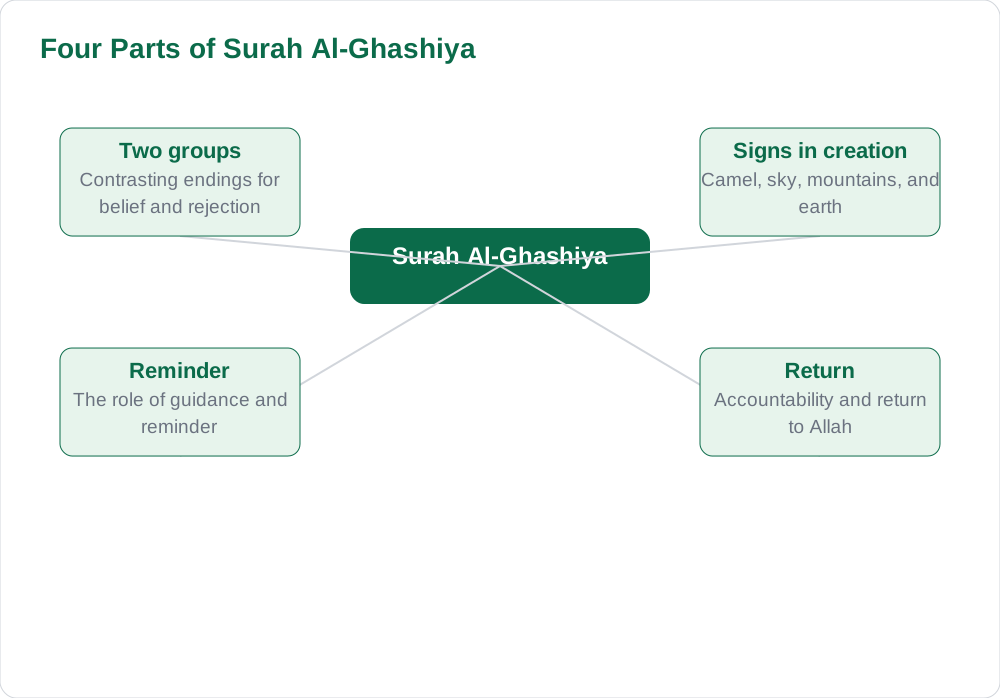
Surah Al-Ghashiya has a clear structure that helps memorisation. It opens with the overwhelming event, then contrasts two groups and their outcomes. Next, it points to signs in creation that invite reflection. It closes with the role of the Messenger as a reminder and the truth of return and account.
Before memorising, read a simple translation with your teacher and divide the Surah into four parts: the two groups, the signs in creation, and the closing reminder. Write one heading for each part in your notebook. These headings become your memory map. You can find more study support in the solved notes and on the books page.
Memorising Verse by Verse
Learn one verse at a time. Read it aloud from your mushaf five to six times, then try it from memory three times. If you make a mistake, look again and repeat. Join each new verse to the previous one and repeat the growing chain.
Work on one section per day rather than the whole Surah. For example, spend day one on the opening verses, day two on the next section, and so on. Keep sessions to fifteen minutes, then rest.
Reflecting on the Signs in Creation
The middle of Surah Al-Ghashiya invites pupils to look at the world with thoughtful eyes. The camel shows strength and endurance in harsh land. The sky shows vastness and order. The mountains show stability. The earth shows a place prepared for life.
Use a notebook to write one reflection line for each sign in your own words. For example, note how the camel reminds you of patience, or how the sky reminds you of order and care. These short reflections make the verses personal and memorable.
- Pause after each creation verse and note one lesson in your own words.
- Connect each sign to a daily habit, such as patience or gratitude.
- Discuss one sign with a classmate or teacher each week.
- Re-read the translation before revision to keep meaning fresh.
Handling Longer Passages Without Forgetting
Longer Surahs are forgotten quickly when pupils learn them in one rush. The fix is a revision loop: new verse, recent verses, old verses. Each day, learn one new verse, revise the verses from the last two days, and recite one older section from the start.
If a verse keeps slipping, isolate it. Repeat it on its own ten times across the day, then place it back in its chain. Do not add new verses until the weak verse feels stable. Ask a listener to follow along in a mushaf once a week so small mistakes are caught early.
- Learn one new verse, revise recent verses, and recite one old section daily.
- Isolate weak verses and practise them separately before rejoining the chain.
- Stop adding new verses until the weak verse feels stable.
- Ask a listener to check your recitation once a week.
A Two-Week Plan for Class 8
Use a two-week plan for Surah Al-Ghashiya. In week one, learn the first two sections verse by verse and revise them daily. In week two, learn the remaining sections and begin reciting the full Surah. By the end of week two, aim to recite the whole Surah with the book open, then gradually without looking.
After two weeks, revise the Surah twice a week and recite it to a teacher or elder once a week. For a shorter Surah method, see the Surah At-Takasur guide and browse the blog for more hifz plans.
AI Help: Muse AI
Muse AI is Meta's personal AI assistant, and it can help you summarise the four parts of Surah Al-Ghashiya or explain the signs in creation in simple words for Class 8. Muse AI does not give official STBB answers — always verify against your STBB book and your teacher. Always check any explanation against your Sindh Textbook Board book and ask your teacher if anything is unclear.
Join Muse with invite code LTGSWD — in the Muse app, go to Settings > Redeem token and enter the code.
Disclosure: LTGSWD is the author's Muse invite code.
5 key points you must know
- Surah Al-Ghashiya contrasts two endings and points to signs in creation.
- Divide the Surah into four sections and use them as a memory map.
- Memorise verse by verse with a join-and-repeat method.
- Reflect on each creation sign in your own words.
- Use a two-week plan with a daily new, recent, and old revision loop.
Frequently asked questions
How should Class 8 pupils pace Surah Al-Ghashiya?
Learn one section per day with about fifteen minutes of practice. A two-week plan is realistic: week one for the first half, week two for the second half and full recitation.
What is the best way to remember a long Surah?
Use a revision loop each day: one new verse, recent verses from the last two days, and one older section. This keeps the whole Surah alive while you still move forward.
How can I reflect on the signs in creation?
After each creation verse, write one lesson in your own words, such as patience from the camel or order from the sky. Short reflections make the verses personal and easier to recall.
What if I keep forgetting one verse?
Isolate that verse, repeat it separately across the day, and then place it back in its chain. Do not add new verses until the weak verse feels stable.
Solved notes — preview free
These guides work best with the solved exercises. Preview the solved notes free on this website — 119 solved notes for Classes 6–10 in Sindhi, Urdu, English and Arabic medium. Or browse the full solved notes catalogue for your class and medium. New solved notes are added regularly — check the catalogue for coming-soon books.