Surah Al-Humaza: Hifz and Meaning for Class 8
Surah Al-Humaza hifz meaning class 8 teaches pupils that words carry weight. This short Surah warns against mocking others, backbiting, and insulting people behind their backs or to their faces. It also warns against trusting wealth as if it makes a person safe forever. In this guide today, you will memorise Surah Al-Humaza in small parts, learn its meaning in plain words, and reflect on how speech shapes school life. Always read the verses from your own mushaf or STBB book, and check your recitation with a teacher or elder.
The Message of Surah Al-Humaza
Surah Al-Humaza opens with a strong warning for every person who mocks and backbites. It then describes someone who gathers wealth, counts it again and again, and imagines that wealth will make them live forever. The Surah closes with a severe warning about the consequence of such behaviour.
Before memorising, read a simple translation with your teacher and discuss examples of harmful speech: mocking, nicknames meant to hurt, gossip, and online comments. Naming these examples helps you see why the Surah is so serious. You can find more study support in the solved notes and on the books page.
Memorising in Small Parts
Divide Surah Al-Humaza into three short parts. Learn the first part by reading it aloud from your mushaf five to six times, then trying it from memory three times. When the first part is smooth, add the second part and repeat both together. Then add the third part and recite the whole Surah.
Practise for about ten to fifteen minutes a day. Say each part slowly and clearly, and check any doubtful word in your mushaf at once. Ask a listener to follow along once a day. A listener can catch small pronunciation slips that you may not notice on your own.
Speech Lessons for School Life
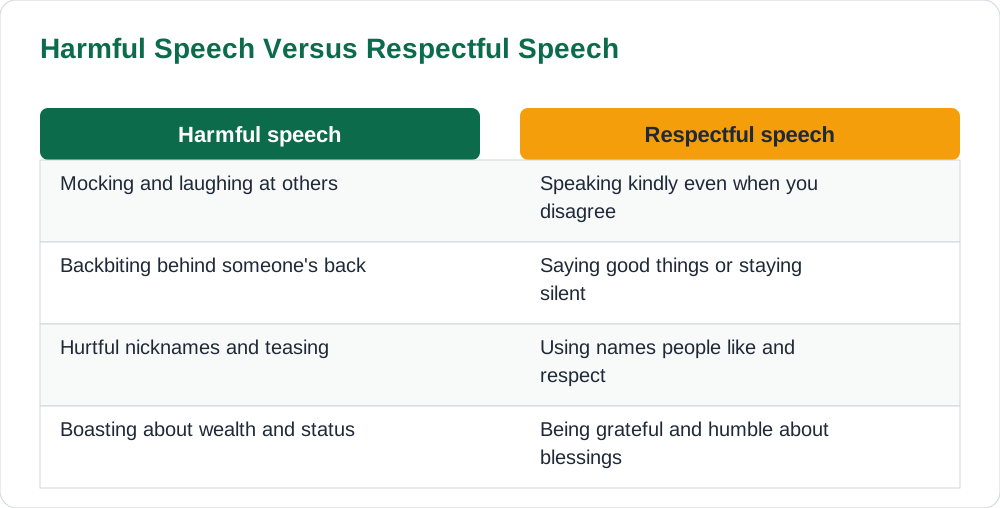
Surah Al-Humaza is highly practical for school. Mockery can start as a joke but leave a lasting hurt. Gossip can spread quickly and damage friendships. Online comments can be even more harmful because they reach many people and stay visible. The Surah teaches pupils to pause before speaking: ask whether your words are true, kind, and needed. If not, silence is better.
Try a one-week speech habit. Each day, avoid one kind of harmful speech and replace it with a kind act: praise a classmate's effort, defend someone who is mocked, or apologise if you hurt someone. Write a short reflection each evening about what went well. This habit turns memorisation into character building.
- Pause before speaking: is it true, kind, and needed?
- Avoid mocking, hurtful nicknames, gossip, and unkind comments.
- Defend a classmate who is mocked instead of joining in.
- Apologise quickly if your words hurt someone.
Wealth, Pride, and Gratitude
The middle of Surah Al-Humaza describes a person who counts wealth again and again and feels safe because of it. The lesson is that wealth does not make a person superior or immortal. True security comes from faith, good deeds, and care for others.
Link this part of the Surah to one simple meaning line in your notebook, such as wealth is a trust, not a reason for pride. Read that line before revision. When meaning and memory work together, the Surah becomes easier to recall and more powerful to live by.
A Six-Day Practice Plan
Use a six-day plan for Surah Al-Humaza. On days one to three, learn one part each day and revise earlier parts. On day four, recite the whole Surah with the book open, then try without looking. On days five and six, revise twice daily and recite to a listener at least once. This short plan builds accuracy without long cramming sessions.
After six days, revise the Surah twice a week. For another short Surah method, see the Surah At-Takasur guide and browse the blog for more hifz plans.
- Days one to three: learn one new part each day and revise old parts.
- Day four: join all parts and recite the full Surah.
- Days five to six: revise twice daily and recite to a listener.
- After one week, revise twice a week to keep the Surah fresh.
AI Help: Muse AI
Muse AI is Meta's personal AI assistant, and it can help you explain the lessons of Surah Al-Humaza on respectful speech and mockery in simple words with school examples. Muse AI does not give official STBB answers — always verify against your STBB book and your teacher. Always check any explanation against your Sindh Textbook Board book and ask your teacher if anything is unclear.
Join Muse with invite code LTGSWD — in the Muse app, go to Settings > Redeem token and enter the code.
Disclosure: LTGSWD is the author's Muse invite code.
5 key points you must know
- Surah Al-Humaza warns against mockery, backbiting, and pride in wealth.
- Memorise in three short parts with a join-and-repeat method.
- Pause before speaking: check whether words are true, kind, and needed.
- Treat wealth as a trust and practise gratitude and humility.
- Revise twice daily for a few days, then twice a week.
Frequently asked questions
What does Surah Al-Humaza teach about speech?
It warns against mocking others, backbiting, and hurtful insults. Pupils should speak kindly, avoid gossip and hurtful nicknames, and choose silence when words would harm someone.
How can I memorise Surah Al-Humaza quickly?
Divide it into three short parts, learn one part at a time, and join each new part to the previous ones. Practise ten to fifteen minutes daily and recite to a listener once a day.
What does the Surah say about wealth?
It warns against trusting wealth as if it makes a person safe forever. Wealth is a trust from Allah, and true security comes from faith, good deeds, and care for others.
How can I apply Surah Al-Humaza at school?
Avoid mocking and gossip, defend classmates who are teased, use respectful names, and apologise if you hurt someone. Choose one kind speech habit each week and practise it daily.
Solved notes — preview free
These guides work best with the solved exercises. Preview the solved notes free on this website — 119 solved notes for Classes 6–10 in Sindhi, Urdu, English and Arabic medium. Or browse the full solved notes catalogue for your class and medium. New solved notes are added regularly — check the catalogue for coming-soon books.