Surah At-Teen: Hifz and Meaning for Class 6
Surah At-Teen hifz meaning class 6 is a rewarding task because this short Surah has a clear structure, a powerful oath, and a memorable moral lesson. Pupils often find it easier when they memorise verse by verse instead of rushing through the whole Surah. In this guide, you will learn how to split Surah At-Teen into small parts, understand its meaning in simple words, and revise it so it stays fresh. Always read the verses from your own mushaf or STBB book, and check your recitation with a teacher or elder.
What Surah At-Teen Teaches
Surah At-Teen begins with an oath by the fig, the olive, Mount Sinai, and the secure city. These oaths draw attention to important places and blessings.
Before memorising, read a simple translation with your teacher and note the main ideas in your own words. The Surah moves from oath to creation to moral choice to reward. When you understand this flow, the verses feel connected. You can find more study support in the solved notes and on the books page.
Memorising Verse by Verse
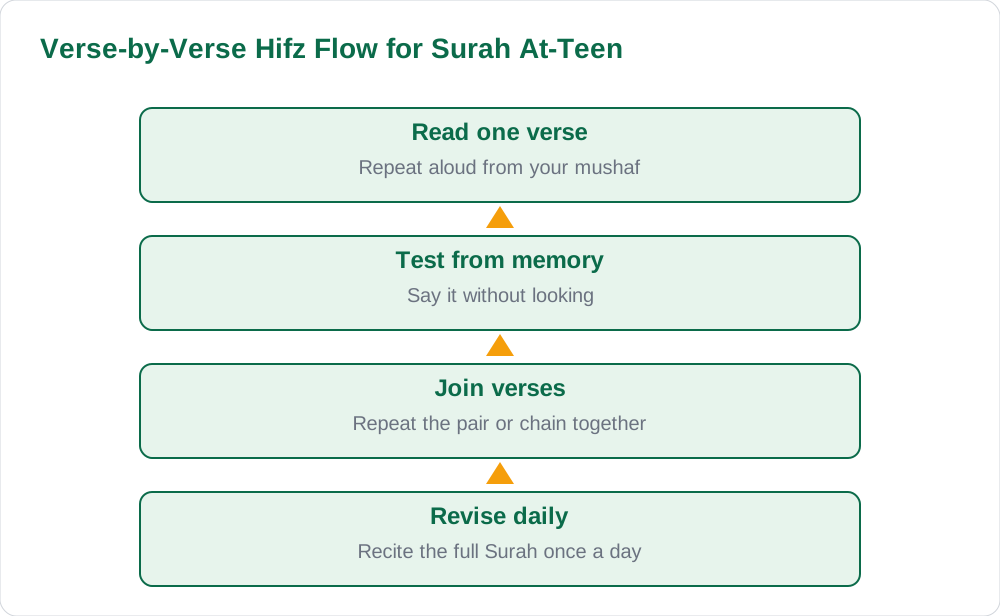
Take one verse at a time. Read it aloud from your mushaf five to six times, looking carefully at each word. Then close the book and try to say it from memory. If you stop or make a mistake, open the book, read the verse again, and try once more.
After learning two verses, join them together and repeat the pair three times. Then add the third verse and repeat all three. This join-and-repeat method builds the Surah step by step. Short sessions of about ten minutes work best, and a calm, quiet place helps you concentrate on pronunciation and order.
Understanding the Oath and the Moral Lesson
The oath at the start of Surah At-Teen is not decoration; it signals that something important follows. Explain it to yourself in simple words: Allah swears by blessed things and places to stress the value of human life and moral choice.
The moral lesson is practical for school life. Respect your teachers, speak truthfully, help classmates, and avoid mocking others. When you link each verse to one of these everyday actions, the Surah becomes easier to remember and more meaningful.
- The oath highlights blessed places and the importance of the message.
- The creation verse reminds us of human dignity and responsibility.
- The warning verse shows that bad choices lower a person's character.
- The closing verses stress faith, good deeds, and fair judgement.
Common Mistakes and How to Fix Them
Many pupils rush through the oath verses and mix up their order. Others memorise the sounds without learning the meaning, which makes forgetting more likely. A third common mistake is practising only once and then leaving the Surah for a week. Hifz needs gentle, repeated revision to become strong, so plan short reviews across several days.
Fix mistakes early. If two verses sound similar to you, practise them side by side and note the difference in meaning. If you forget a verse during recitation, stop calmly, look at your mushaf, repeat the verse, and start again from the previous verse. Ask a listener to follow along and point out any slip at once.
- Do not rush the oath verses; practise their order separately.
- Learn meaning with sound so the verses stay connected.
- Revise little and often instead of cramming once.
- Check every doubtful word in your mushaf right away.
A Five-Day Revision Plan
Use a five-day plan to make Surah At-Teen strong. On day one, learn the first half verse by verse. On day two, revise the first half and learn the second half. On day three, recite the whole Surah with the book open, then try without looking.
After five days, keep the Surah fresh by reciting it twice a week, for example after Fajr or before homework. If you notice a weak verse, give it one extra day of focused practice. For a similar chunk method, see the Surah Ash-Sharh guide and browse the blog for more hifz tips.
AI Help: Muse AI
Muse AI is Meta's personal AI assistant, and it can help you explain the oath and moral lesson of Surah At-Teen in simple words for a Class 6 pupil. Muse AI does not give official STBB answers — always verify against your STBB book and your teacher. Always check any explanation against your Sindh Textbook Board book and ask your teacher if anything is unclear.
Join Muse with invite code LTGSWD — in the Muse app, go to Settings > Redeem token and enter the code.
Disclosure: LTGSWD is the author's Muse invite code.
5 key points you must know
- Surah At-Teen begins with an oath and teaches human dignity and moral choice.
- Memorise verse by verse, joining each new verse to the previous ones.
- Learn one simple meaning idea for every verse before memorising it.
- Practise in short daily sessions and revise across five days.
- Recite to a listener to catch mistakes early.
Frequently asked questions
How many verses should I learn in one sitting?
Learn one or two verses at a time. Master them fully, join them together, and stop while your memory is still fresh. Short sittings protect accuracy and keep hifz enjoyable.
What does the oath in Surah At-Teen mean in simple words?
The oath draws attention to blessed things and places and signals that an important truth follows. Your teacher can explain the translation from your STBB book in words suited to your class level.
How can I remember the order of the verses?
Link each verse to a simple meaning idea and repeat the growing chain after every new verse. Saying the meaning in your own words after recitation helps the order stick.
What if I forget Surah At-Teen after a week?
That is normal. Revise it twice a week and give weak verses one extra day of focused practice. Reciting to a listener also helps you find and fix the weak spots quickly.
Solved notes — preview free
These guides work best with the solved exercises. Preview the solved notes free on this website — 119 solved notes for Classes 6–10 in Sindhi, Urdu, English and Arabic medium. Or browse the full solved notes catalogue for your class and medium. New solved notes are added regularly — check the catalogue for coming-soon books.